
 English
 Bulgaria
 Czech Republic
 Georgia
 Hungary
 Romania
 Slovakia
April 15, 2026
Spa Treatment for Chronic Bronchitis: Natural Therapy for Respiratory Wellness

At a Glance: Respiratory Spa Therapy
Spa treatment for chronic bronchitis is an evidence-based medical programme that uses natural resources, such as mineral waters and specific microclimates, to soothe inflamed airways.
- Key benefits: Thins and clears stubborn mucus, reduces bronchial inflammation, and strengthens respiratory muscles.
- Programme duration: Typically requires 2 to 3 weeks for lasting physiological improvement.
Medical role: This is a complementary approach designed to work alongside your doctor’s prescribed medication, focusing on long-term stability and prevention of future flare-ups.
Understanding Spa Treatment for Chronic Bronchitis
Living with chronic bronchitis often feels like a constant struggle for every breath, where a persistent cough and chest congestion dictate the rhythm of your day. It is a condition defined by the long-term inflammation of the bronchial tubes, which leads to excessive mucus production and a narrowing of the airways. While often discussed alongside COPD (Chronic Obstructive Pulmonary Disease) - an umbrella term for progressive lung diseases - chronic bronchitis is a specific, manageable condition that responds remarkably well to natural thermal interventions.
Spa treatment for chronic bronchitis is a medically-supervised therapeutic programme that uses natural thermal waters, mineral-rich aerosols, and specialised inhalation techniques to reduce airway inflammation and improve respiratory function.
Specialized spa therapy is highly beneficial for lung health. By combining a clean air microclimate with targeted inhalation treatments, it reduces the frequency of infections and strengthens the respiratory muscles. Unlike a standard holiday, a medical spa provides a controlled environment that allows the lungs to rest from pollutants while receiving concentrated mineral care. Many of these specialised treatments are available at Ensana's thermal water destinations, where historical expertise meets modern respiratory care.
For over a century, European thermal medicine has utilized mineral-rich waters to treat the respiratory tract. When these waters are transformed into fine aerosols or steam, they penetrate deep into the bronchial tree. The minerals—often sulphur or salt—help to dissolve thick mucus, making it easier to clear, while the warmth of the treatment increases blood flow to the lung tissues, aiding the body's natural healing process.
Approach - Key Benefits - Typical Timeframe - Best Suited For
Conventional Medicine - Rapid symptom control, emergency relief - Ongoing/Immediate - Acute flare-ups and daily management
Spa Treatment - Mucus clearance, reduced inflammation, immune boost - 2–3 weeks (intensive) - Chronic phase and prevention of relapse
Combined Approach - Optimized lung function and improved quality of life - Continuous + Annual spa course - Long-term stability for chronic sufferers
Types of Spa Treatments for Chronic Bronchitis
To manage chronic bronchitis effectively, professional spa programmes utilize a suite of specialised techniques known as respiratory balneotherapy. These therapies rely on mineral-rich thermal water treatments to hydrate, cleanse, and repair the respiratory tract, with each modality targeting a specific area of the lungs or upper airways.
Many patients ask us whether a sauna can help with bronchitis. The truth is, it can be a helpful supporting tool, but it is not a primary treatment. The warm, humid air of a steam sauna can help loosen mucus and relax the bronchial muscles. However, the intense heat of a dry Finnish sauna may be too taxing for some patients with compromised lung function. It is best used as a relaxation aid rather than a medical intervention for the lungs themselves.
Instead, the following specialised procedures represent the most effective and medically-proven treatments for achieving deep respiratory recovery and long-term symptom relief.
Aerosol Therapy
Aerosol therapy involves breaking down mineral-rich thermal water into microscopic droplets. These particles are so small—often between 2 and 5 microns—that they can travel past the throat and deep into the lower bronchial tree.
- Procedure: You sit comfortably and breathe through a specialised mouthpiece or mask for 10–15 minutes.
- Benefits: This is the gold standard for reaching the deep airways. The mineral content helps to liquefy stubborn mucus and reduce inflammation directly at the source.
Inhalation Therapy
While similar to aerosols, standard inhalations typically use larger steam particles. This treatment often incorporates natural gases or essential oils added to the thermal water to enhance the soothing effect on the mucous membranes.
- Procedure: A 15-minute session involving deep inhalation of warm, mineral-rich steam.
- Benefits: Excellent for soothing a "barking" cough and hydrating the upper and middle bronchial tubes.
Humage (Thermal Water Vapour)
Humage is a specialised treatment that utilizes the natural gases (such as hydrogen sulfide) released from thermal waters. Unlike steam, this is a dry gas inhalation.
- Procedure: You breathe in the natural vapours released directly from the thermal source, usually for 10 minutes.
- Benefits: The sulphurous gases have a powerful natural antibiotic and anti-inflammatory effect, helping to regenerate the lining of the respiratory tract.
Pulverisation and Atomisation
These treatments involve a "rain" of mineral water. Pulverisation uses a heavy mist to wash the pharynx and throat, while atomisation creates a very fine, dense fog that fills a collective treatment room.
- Procedure: These are often collective sessions lasting 20 minutes where you simply breathe the mineral-saturated air.
- Benefits: This provides a gentle, constant hydration of the entire respiratory system, making it ideal for patients who find direct mouthpieces uncomfortable.
Nasal Irrigation
Chronic bronchitis is often exacerbated by post-nasal drip or sinus issues. Nasal irrigation uses a gentle flow of thermal water to cleanse the nasal passages.
- Procedure: Thermal water is flowed through one nostril and out the other using a specialised glass vessel.
- Benefits: It clears allergens and bacteria from the upper respiratory tract, preventing them from draining into the lungs and causing further inflammation.
Pulmonary Ventilation Exercises
These are guided physical therapy sessions led by specialised respiratory therapists.
- Procedure: 20–30 minutes of targeted breathing techniques and chest wall mobilizations.
- Benefits: These exercises increase your lung capacity and strengthen the diaphragm, making each breath more efficient and less tiring.
What to Expect: Spa Treatment Programme Structure
A professional respiratory spa programme is a structured, medical journey designed to provide far more than a temporary escape. To achieve a lasting impact on chronic bronchitis, a multi-week approach is essential. Most therapeutic multi-week spa hotel programmes last two to three weeks, allowing for a cumulative effect where each session builds upon the last to deeply hydrate the bronchial tree and reduce chronic inflammation.
While you may notice clearer breathing within the first few days, the true physiological shift—such as improved lung capacity and a stronger immune response—typically solidifies toward the end of the second week. Throughout this time, your progress is monitored by medical professionals who personalize your schedule based on the severity of your symptoms and your daily energy levels.

A Typical Day of Respiratory Recovery
🌅 Morning walk and healthy breakfast (6:30 AM – 8:30 AM)
- Start your day with a light stroll in the fresh air to gently expand your lungs, followed by a nutritious, easy-to-digest breakfast based on the Ensana Healthy Choice dietary concept.
🌬️ Morning inhalations and mineral therapy (9:00 AM – 12:00 PM)
- Your main therapeutic block focusing on airway clearance. This includes deep inhalations using natural mineral waters to moisturize mucous membranes. This block may also feature mineral baths to boost systemic immunity or guided sessions led by a specialist to help strengthen the diaphragm and correct your breathing stereotype.
🥗 Nutritious lunch and vital rest (12:00 PM – 2:00 PM)
- A balanced lunch followed by a mandatory midday rest period. For respiratory patients, this rest is essential to allow the lungs to process the morning’s mineral intake without physical exertion.
🌫️ Afternoon bronchial procedures (2:00 PM – 4:00 PM)
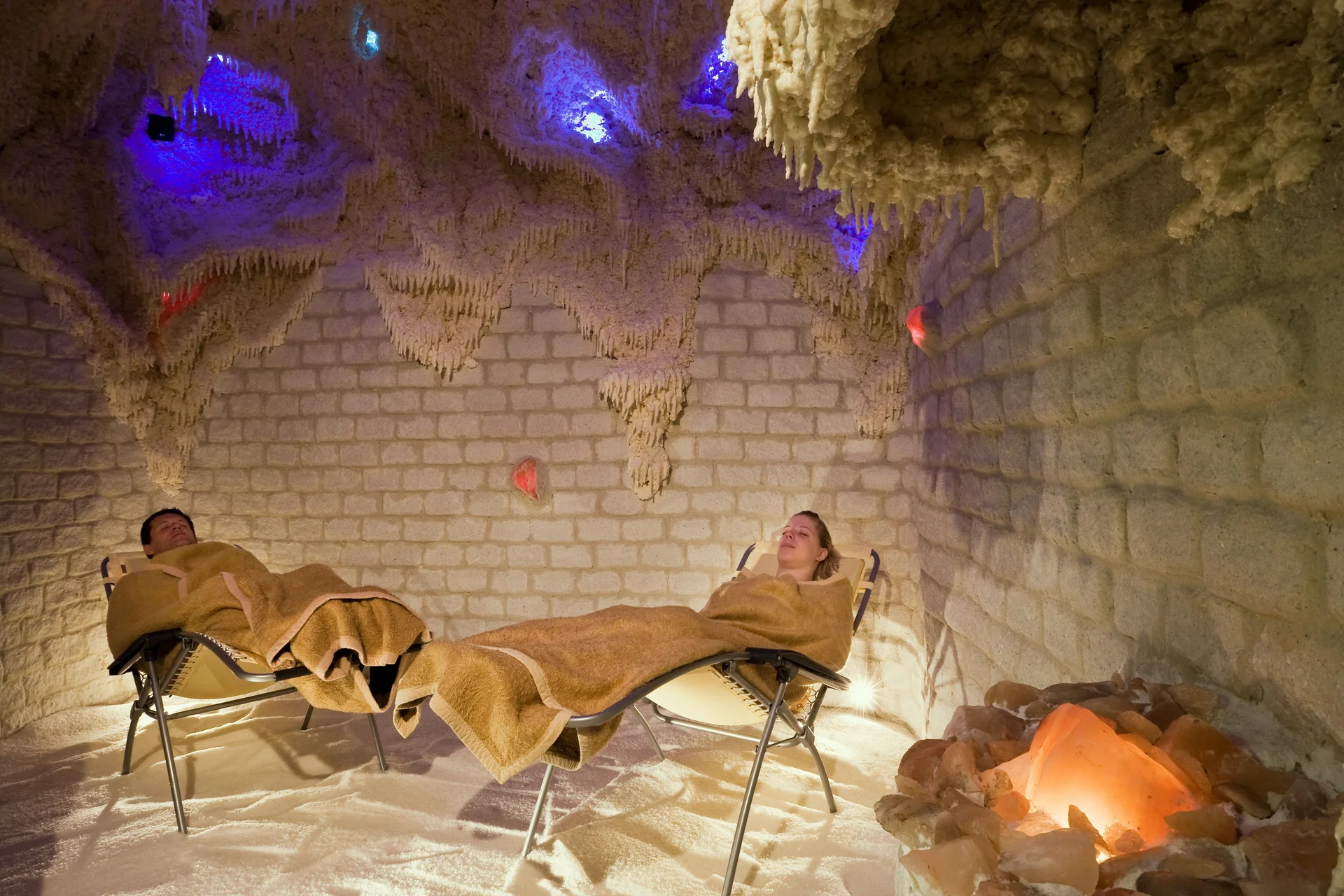
- A focused session that may include salt cave therapy (halotherapy) to reduce bronchial inflammation or group exercises in the thermal pool to improve chest wall mobility.
🍃 Climatic therapy and forest bathing (4:00 PM – 6:00 PM)
- Time dedicated to climatic therapy—taking a prescribed walk in the local healing microclimate or practicing forest therapy to inhale natural phytoncides that support lung recovery.
🌊 Dinner and autogenic training (6:00 PM – 9:00 PM)
- A light dinner followed by relaxation techniques like autogenic training or health coaching to lower stress, which is a common trigger for shortness of breath, before the 10:00 PM night quiet time.
Clinical Benefits and Expected Outcomes
Clinical research into balneotherapy consistently demonstrates that while chronic bronchitis and COPD are manageable rather than fully curable, structured spa interventions provide a physiological shift that medication alone often cannot achieve. The primary clinical benefit lies in the improvement of mucociliary clearance—the body's natural ability to flush irritants and mucus from the lungs.
Important: Chronic bronchitis is a manageable condition, not curable. Spa treatment significantly improves symptoms and quality of life but works alongside, not instead of, your prescribed medications.
While you cannot "get rid of" chronic bronchitis entirely, you can achieve significant symptom control that mimics a return to health. This is achieved by combining conventional medical care with lifestyle changes and annual courses of evidence-based spa therapy to maintain airway hydration and prevent the progression of lung tissue damage.
By utilizing mineral-rich aerosols, these treatments reduce airway inflammation and promote the healing of the mucous membranes. Measurable outcomes often include improved lung capacity metrics (such as FEV1) and a significant reduction in the frequency of acute exacerbations (flare-ups).
Beyond immediate relief, the true value of a respiratory programme is seen in the months following the stay. Patients typically report a decreased reliance on rescue inhalers and an increased ability to perform daily physical activities without breathlessness. This sustained benefit is attributed to the combination of bronchial "cleansing" and the strengthening of respiratory muscles through guided physiotherapy.
Pricing, Booking and Practical Information
Managing your respiratory health is an investment in your long-term independence. At Ensana, we prioritize transparency to ensure you can focus entirely on your recovery. Our comprehensive respiratory packages typically range from €60 to €115 per person per night, depending on the destination and season.
What is Included?
Most therapeutic packages are all-inclusive to provide a stress-free healing environment. Your stay typically covers:
- Accommodation in a room category of your choice.
- Full board featuring the Healthy Choice nutritional concept.
- Initial and final medical consultations with a specialised physician.
- Prescribed treatments, such as inhalations, aerosols, and respiratory physiotherapy (averaging 2–3 per day).
- Access to wellness facilities, including pools, saunas, and salt caves.
Additional costs to consider include travel to the destination, room upgrades, and any supplementary specialised treatments not included in your initial medical plan.
How to Book Your Programme
To ensure the best availability and a seamless arrival, we recommend booking 6–8 weeks in advance, especially for popular spring and autumn seasons.
Select your destination
- Choose from our specialised respiratory resorts, such as Mariánské Lázně or Sovata.
Request a quote
- Use our online booking form or call our reservation assistants to discuss your specific medical needs.
Medical pre-assessment
- We may ask for a brief summary of your current condition to ensure the chosen resort is perfectly suited for you.
Confirm and deposit
- Secure your dates with a deposit. Our flexible cancellation policies allow for changes up to 14 days before arrival (subject to specific hotel terms).
Many European health insurance providers recognize Ensana as a certified medical provider. We recommend contacting your insurance company prior to booking to discuss potential reimbursement for the medical part of your stay. Upon departure, we provide all necessary medical documentation and invoices to support your claim.
Ready to breathe easier? Contact our multilingual team via phone, email, or our online booking portal to begin your journey toward respiratory wellness.

Safety Considerations and Contraindications
Your safety is our priority. While spa therapy is a highly effective intervention for chronic bronchitis, it is reserved for the stable, chronic phase of the condition. Treatment must be timed correctly to ensure the respiratory system can respond positively to the mineral stimulation without being overwhelmed.
When considering long-term health, it is important to recognize what individuals with chronic bronchitis most often have to deal with: primarily a persistent cough with significant mucus production. Without intervention, these symptoms often progress into more restrictive conditions like COPD, making early and regular spa therapy a vital preventative tool.
By ensuring you are in a stable phase of your condition, our medical teams can safely apply the healing power of thermal waters to strengthen your lungs and prevent future flare-ups.
⚠️ Safety First
Always consult your GP or respiratory specialist before booking a spa treatment. Medical clearance is required for guests with advanced conditions to ensure the therapies are appropriate for your current health status.
Contraindications: When to Avoid Spa Therapy
There are specific circumstances where spa treatments are unsuitable or even dangerous. You should avoid or postpone your stay if you have:
- Acute respiratory infections: Including active pneumonia, fever, or severe flu-like symptoms.
- Acute exacerbations: If you are currently experiencing a sudden worsening of symptoms (increased breathlessness or chest pain).
- Uncontrolled heart disease: Severe hypertension or unstable cardiac conditions.
- Active tuberculosis: Or any other highly contagious respiratory disease.
- Recent surgery: Any major thoracic or abdominal surgery within the last 3-6 months.
Possible Side Effects
During the first few days of treatment, you may experience a temporary increase in coughing as the body clears loosened mucus, mild fatigue as your system adjusts to the mineral intake, or a slight change in your breathing pattern. These are normal signs that the therapy is working and are monitored during your pre-treatment medical assessment at Ensana.
Start Your Respiratory Wellness Journey at Ensana
Choosing to manage your chronic bronchitis through a professional spa programme is a proactive investment in your ability to breathe freely. By combining the natural power of mineral-rich aerosols with specialised medical supervision, our guests experience a significant reduction in inflammation, enhanced mucus clearance, and a stronger immune response against future infections.
Why choose Ensana? Our heritage in thermal medicine spans over a century, blending historic European healing traditions with modern clinical expertise. At our world-class destinations, you are supported by a dedicated team of balneotherapists and physicians who personalize every treatment to your specific respiratory needs. Many guests view these stays as essential preventative wellness programmes that protect their future vitality.
Take the first step toward better lung health today:
- Speak with our medical team to find the ideal resort for your condition.
- Book 6–8 weeks in advance to secure your preferred dates during the optimal spring or autumn respiratory seasons.
- Reclaim your quality of life alongside your current medical plan.
Don't let breathlessness define your future. Book your consultation today and discover how our heritage of healing can help you regain control of your respiratory wellness.
How to get rid of chronic bronchitis?
While chronic bronchitis cannot be completely cured, it can be highly effectively managed. As a long-term condition characterized by persistent airway inflammation, the goal of treatment is to minimize symptoms and prevent progression. A combination of conventional medicine, lifestyle changes, and specialised spa therapy offers the best results. Spa treatments—utilizing mineral-rich thermal waters and targeted inhalations—reduce inflammation, clear stubborn mucus, and strengthen the respiratory muscles. Most patients find that integrating regular spa courses with their medical plan results in significantly fewer flare-ups and a much higher quality of life.
Can a sauna help with bronchitis?
A traditional sauna may provide temporary relief by using warm, humid air to loosen mucus and soothe irritation, but it is not a primary medical treatment. Specialized therapies like aerosol inhalation and humage are far more effective because they deliver specific minerals directly to the deep bronchial tree at controlled therapeutic temperatures. While a sauna can be a pleasant complement to a wellness programme, it should not replace medically-supervised respiratory therapies. Always consult your specialist before using a sauna, as the intense heat can occasionally be taxing for those with compromised lung function.
Is spa good for lungs?
Yes, medically-supervised spa treatment is an excellent tool for lung health, particularly for those managing chronic bronchitis, asthma, or COPD. These treatments work through several clinical mechanisms: the mineral content (such as sulphur and magnesium) acts as a natural anti-inflammatory, while warm aerosols improve mucociliary clearance. Clinical research indicates that regular spa programmes can improve lung function metrics, reduce dependency on rescue medication, and lower the frequency of respiratory infections. For over a century, European health resorts have documented these outcomes, proving that spa therapy is a powerful, evidence-based complement to standard medical care.
What do individuals who have chronic bronchitis most often have?
Individuals with chronic bronchitis most often present with a persistent, productive cough that lasts for at least three months a year over two consecutive years. This is frequently accompanied by breathlessness during exertion, wheezing, and a susceptibility to frequent chest infections. Because chronic bronchitis is a primary component of COPD, many individuals also experience reduced exercise tolerance and fatigue. Spa treatment directly addresses these challenges by hydrating the respiratory tract, clearing airways, and improving the "breathing stereotype" through specialised physiotherapy, helping to mitigate these common symptoms.


